
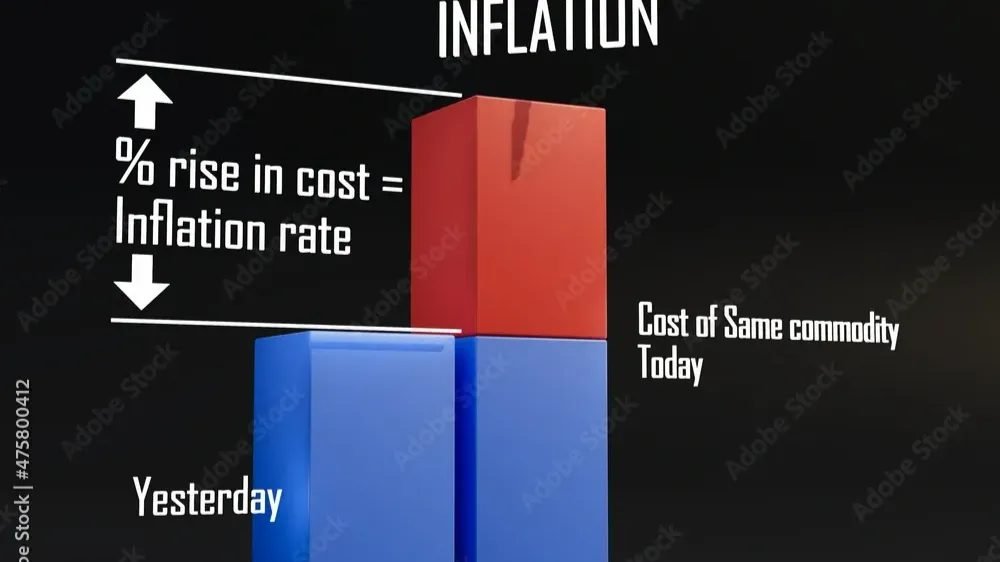
The fundamental promise of sound finance is the preservation of purchasing power. The modern financial ecosystem, however, operates on a complex, interwoven lie: the illusion of stability and the subsequent mirage of yield.
We are currently navigating a macro environment where the pursuit of ‘yield’ has become a panicked, desperate affair, driven not by the desire to grow wealth, but merely to avoid the systematic, silent confiscation of capital that defines the fiat era. This edition of The New School confronts the core deceit of traditional finance. The lie is that a dollar saved is a dollar earned.
The Fiat Stability Paradox
When central bankers speak of "stability," they are not referring to price stability in the classical sense. They are referring to systemic stability-the capacity of the debt architecture to continue functioning without immediately imploding. This stability is maintained through managed volatility and systematic inflation.
The greatest trick central banks ever pulled was convincing savers that 2% annual inflation is benign, or even necessary. In reality, [1] 2% inflation is a targeted, annual destruction of the monetary base, designed to incentivize immediate consumption and penalize saving. Over a decade, this means 20% of your purchasing power has been deliberately vanished. [2] In addition, the reality is far worse, because the official metrics used to measure this decay are themselves manipulated. The Consumer Price Index (CPI), the primary gauge used by governments to justify their economic policies, is a statistical "curve-ball."
Through hedonic adjustments, substitution effects, and changes in the basket composition, CPI systematically understates the true cost of living increase experienced by the average citizen, especially concerning non-discretionary necessities like housing, healthcare, and education. If you earn 5% nominal yield on a long-term Treasury bond, but your actual cost of living-the true cost of maintaining your quality of life-is rising at 8%, your real yield is negative 3%.
You are participating in a slow-motion liquidation event. The yield is a mirage, a nominal placeholder masking a profound decline in wealth. The dollar, the supposed global reserve anchor, is stable only in its guaranteed trajectory toward zero purchasing power. This instability is structural. It is the necessary grease for a debt-based economy that requires constant expansion of the money supply to service exponentially growing obligations. The traditional finance system is not designed to protect capital; it is designed to transfer it from the passive saver to the highly leveraged debtor and the issuer of the currency.
The Search for Real Yield
The flight from fiat cash and low-yielding government bonds is the inevitable macro consequence of this realization. When financial professionals understand that the risk-free rate is actually the guaranteed-loss rate, capital immediately begins flowing into areas promising returns that can outpace the hidden tax of inflation. This is why we see asset bubbles in real estate, equity markets, and private credit. These are not necessarily signs of underlying economic health; they are symptoms of capital desperately seeking refuge. People are not investing in stocks because the underlying companies are fundamentally delivering 10% annual productivity gains; they are investing because holding cash guarantees a 7% loss, and equities offer the potential for preservation.
In this environment, the concept of ‘yield’ has been corrupted. 1. Nominal Yield: The stated percentage return (e.g., a 5% CD rate). This is meaningless without context. 2. Real Yield: Nominal Yield minus Official Inflation (e.g., 5% – 3% CPI = 2% Real Yield). This is misleading because official inflation is flawed. 3. True Yield: Nominal Yield minus Actual Cost-of-Living Inflation. This is almost universally negative across the legacy fixed-income space today.
The scarcity of true yield drives market behavior, forcing investors further out on the risk curve. This dynamic fuels the speculative frenzy and instability that central banks ironically claim to be mitigating. They create the instability through monetary debasement and then attempt to manage the consequences, inevitably leading to boom-bust cycles fueled by cheap, illusory capital.
Bitcoin: The Honest Accounting
Bitcoin fundamentally disrupts the concept of yield by redefining the baseline of value. Its primary function is not to generate yield in the traditional sense (e.g., dividends or interest derived from lending or production), but to offer absolute preservation of purchasing power over the long term. Bitcoin’s yield is derived from its perfect scarcity and its complete independence from the political and monetary manipulation that plagues fiat systems.
1. Zero Counterparty Risk
Every form of fiat yield-whether it’s a bond, a savings account, or a corporate debt instrument-carries counterparty risk. You are trusting the bank, the government, or the corporation to honor their obligation in the future, and crucially, you are trusting the central bank not to devalue the unit of account in which that obligation is denominated. Bitcoin, when held self-custodially, removes the vast majority of counterparty risk. It is a bearer instrument. The protocol guarantees the supply schedule and the immutability of the ledger. The yield here is the avoidance of systemic failure risk-a yield that cannot be quantified in basis points but is infinitely valuable in a world increasingly characterized by institutional distrust and systemic fragility.
2. The Yield of Scarcity
Bitcoin’s supply schedule is inelastic and perfectly predictable. Only 21 million BTC will ever exist. This fixed supply guarantees[6] that Bitcoin cannot be debased via political necessity or central bank intervention.
In the fiat world, yield requires growth-more debt, more production, more consumption, and always, more monetary expansion. In the Bitcoin world, the ‘yield’ comes from the simple, mathematical certainty that as global demand for sound money increases, and as the supply of fiat continues its guaranteed expansion, the relative value of the perfectly scarce asset must increase. This is not speculation; it is mathematical inevitability rooted in the laws of supply and demand applied to a monetary good.
The appreciation of Bitcoin against the dollar is not volatility; it is the dollar’s predictable collapse measured against a fixed point of reference. The yield is the differential between the constant devaluation of fiat and the guaranteed fixity of BTC.
3. Low Time Preference and Real Capital Formation
The negative real yield inherent in fiat forces a high time preference: spend now, because saving is penalized. This high time preference leads to malinvestment, short-term thinking, and societal decay. Bitcoin enforces a low time preference by offering a medium of exchange that cannot be debased, instead it rewards saving and patience. It allows capital to be preserved for true long-term investment, innovation, and infrastructure that requires decades of planning, rather than quarterly earnings reports. The real yield of Bitcoin is the restoration of honest economic signaling. It allows businesses and individuals to make decisions based on true economic costs and returns, rather than distortions created by interest rate manipulation and quantitative easing.
Trading the Mirage
From a trading perspective, the realization that fiat yields are fake fundamentally changes strategy. The traditional 60/40 portfolio (60% equities, 40% fixed income) is effectively a 60%[5] growth/40% guaranteed loss portfolio when real yields are negative. Institutional flows are now explicitly pricing in the lack of real yield. This is why:
1. Demand for Hard Assets:
The enduring strength in commodities, gold, and Bitcoin is a direct reflection of capital fleeing paper promises. These assets are non-sovereign stores of value.
2. The ETF Catalyst:
The successful launch and sustained inflow into spot Bitcoin ETFs underscores that institutional capital views BTC not merely as a tech stock or a speculative gamble, but as a mandatory allocation for purchasing power preservation. It is being treated as the digital gold component, offering superior inflation protection compared to physical gold due to its verifiable scarcity and ease of transfer.
3. The Dollar Endgame:
As the Federal Reserve struggles to manage inflation without collapsing the debt market, the pressure on the dollar increases. Any attempt to lower rates prematurely will be seen by the market as a tacit admission that inflation is politically necessary-a strong signal to rotate further into hard assets like Bitcoin. Traders must recognize that the volatility of Bitcoin is the price paid for escaping the guaranteed loss of the legacy system. The short-term price swings are noise; the long-term trend of appreciation against fiat is the signal. This trend is driven by the immutable mathematical reality that Bitcoin is the only asset that guarantees the supply side of the money equation.
Conclusion: Escaping the Illusion
The illusion of fiat stability is perhaps the most dangerous deception of the modern age. It convinces individuals to accept nominal returns that guarantee real losses, effectively participating in their own financial demise. The search for real yield is the defining macro theme of the decade. It is a search that ends when investors recognize that true yield is not found in complex derivatives or government promises, but in the simplicity and mathematical certainty of a sound money protocol.
Bitcoin offers the ultimate form of yield: the preservation of human economic energy across time. It is the only asset that provides honest accounting in a world drowning in monetary deceit. The decision facing every serious investor is simple: continue chasing the nominal mirage in the decaying fiat landscape, or anchor capital in the verifiable reality of the Bitcoin protocol. The choice is between guaranteed decay and mathematical certainty. The New School position remains clear: Bitcoin is not merely a hedge against inflation; it is the only path to true, non-confiscatable purchasing power preservation and the foundation for a global financial system built on truth, not debt.
Sources:
[1] Jim Rickards (via Daily Reckoning) - https://dailyreckoning.com/the-greatest-trick-central-banks-ever-pulled/
[2] U.S. Bureau of Labor Statistics (BLS) - https://data.bls.gov/cgi-bin/surveymost?cu
[3] Federal Reserve Bank of St. Louis (FRED) - https://fred.stlouisfed.org/series/CPIAUCSL
[4] Bureau of Labor Statistics (BLS) - https://www.bls.gov/cpi/
[5] Vanguard - https://investor.vanguard.com/investing/how-to-invest/60-40-portfolio
[6] Investopedia - https://www.investopedia.com/tech/how-many-bitcoins-are-left/