
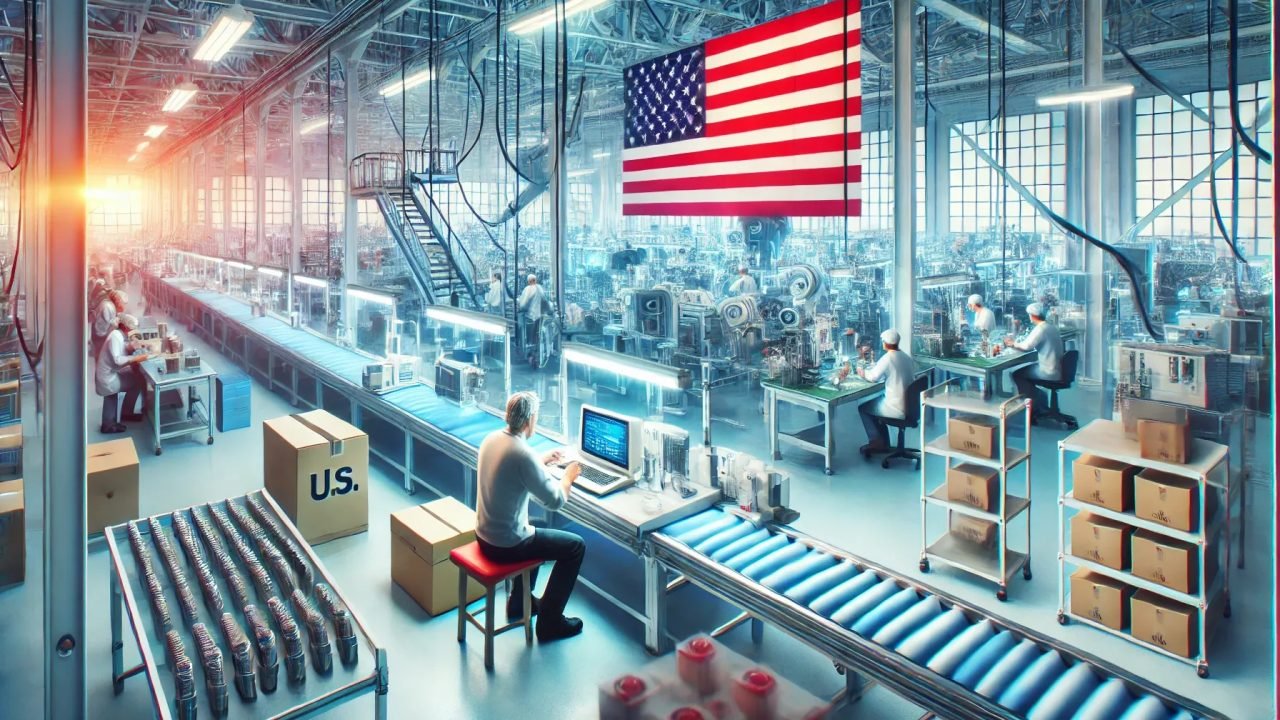
In the last few weeks, the corporate media has been touting the idea that Trump's proposed tariffs will cause inflation, reduce business investment, and trigger a global trade war. However, that’s exactly the opposite of what we’re already seeing unfold.
What is the true story? Companies are rushing to invest in American infrastructure and manufacturing to avoid tariffs. This is a repeat of what happened during Trump's first term when tariffs on China led to record onshoring of factories and supply chains.
1. Massive Increase in Domestic Manufacturing
- Companies are already moving operations back to the U.S. to avoid tariffs.
- Case Study: Intel & TSMC → Instead of relying on Taiwan, both companies are expanding semiconductor plants in Arizona and Ohio.
- Ford & GM → Increasing U.S. auto production rather than importing from tariff-affected regions.
This follows the same trend as Trump's 2018 tariffs on Chinese imports, which led to a surge in American factory investments which is a fact often ignored by critics.
2. Job Creation and Wage Growth
- Taiwan Semiconductor Manufacturing Company (TSMC): In March 2025, TSMC announced a $100 billion investment to establish three new advanced semiconductor plants in the United States. This expansion builds on their prior commitment of $65 billion for similar initiatives in Arizona under the CHIPS and Science Act. Politico
- SoftBank: In December 2024, Japan's SoftBank revealed plans to invest $100 billion in U.S. projects over the next four years, focusing on artificial intelligence and related technologies. AP News
- Adani Group: In March 2025, India's Adani Group revived plans for significant infrastructure investments in the U.S., including projects in nuclear power, utilities, and an East Coast port, amounting to approximately $10 billion. Reuters
3. Securing Supply Chains & Economic Independence
The pandemic exposed how dangerous it was for the U.S. to depend on foreign countries for critical goods. Tariffs are forcing companies to rethink outsourcing, leading to stronger domestic supply chains and less vulnerability to geopolitical disruptions.
4. The Myth of Inflation & Higher Consumer Prices
Mainstream economists claim tariffs will raise prices for consumers, but that ignores the long-term shift in production costs. As more companies produce domestically, transportation and logistics costs fall. This ultimately leads to an offsetting of any initial price increases.
- Cra-Z-Art: The largest U.S. toy manufacturer is expanding domestic production by 50% in Tennessee and Florida to lower logistics costs and avoid Chinese tariffs, ensuring stable consumer prices. (New York Post)
- Ferrara Manufacturing: A New York-based garment factory is experiencing renewed demand as brands shift production back to the U.S., reducing supply chain risks and transportation expenses. (Wall Street Journal)
- Guardian Bikes: The bicycle company moved production from China to the U.S. to cut import tariffs, lower shipping costs, and stabilize pricing for American consumers. (Wall Street Journal)
Conclusion: Tariffs Will Strengthen America, Not Weaken It
The reality is simple: Tariffs do not destroy economies—they redirect capital and investment into the domestic market. While some prices may see short-term adjustments, the long-term effect is an industrial boom, higher employment, and economic sovereignty.
Rather than falling for globalist fearmongering, we should recognize what’s actually happening:
- The U.S. is re-industrializing at a rate not seen in decades.
- Jobs are returning because of tariffs, not despite them.
- Investors are already pivoting toward American markets.
Trump's tariffs will not be an economic disaster—they will be the catalyst for America’s next industrial revolution. 🚀
O
Search