
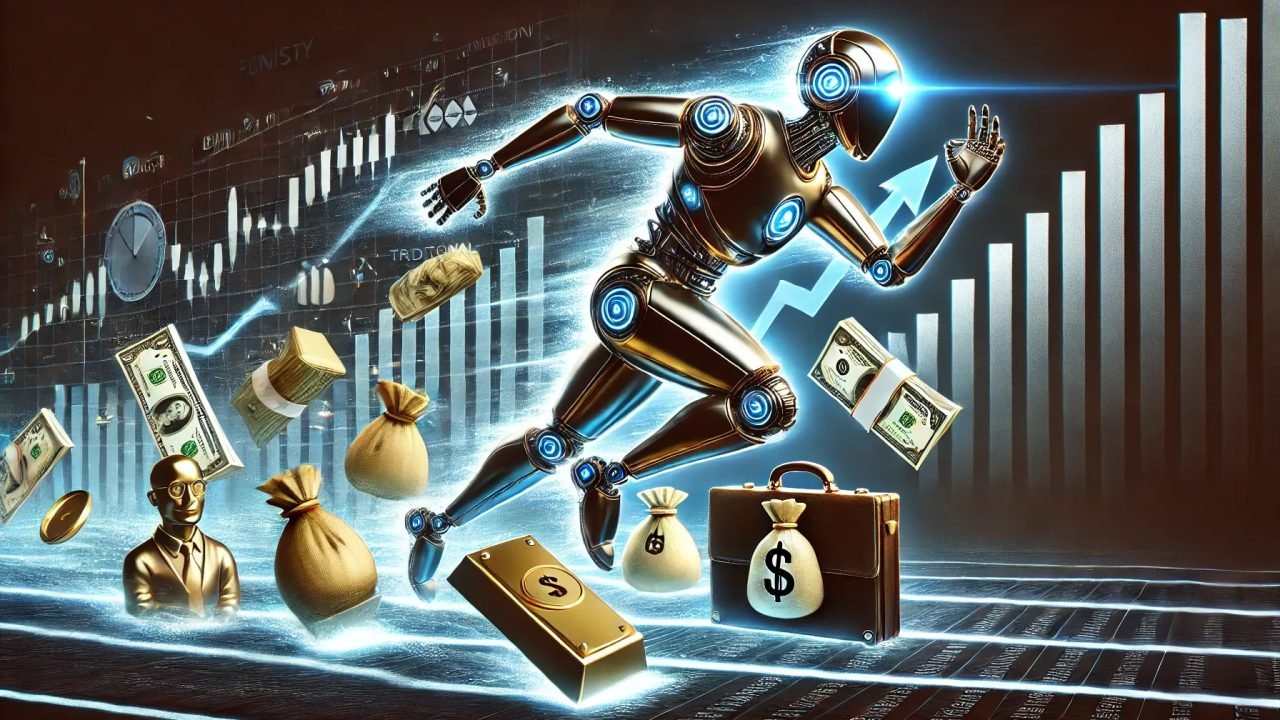
As 2024 closes its books, one question echoes across the financial landscape: Did the Old School of investing keep pace with the New School? In a year marked by market volatility, geopolitical drama, and rapid technological advancements, the contrast between algorithmic trading and traditional investment strategies has never been clearer.
Let’s take a look at how these two approaches fared and what it means for the future of finance.
Traditional Returns: A Year of Peaks and Valleys
Traditional investment strategies, from mutual funds to ETFs, faced a challenging year. Inflationary pressures, shifting central bank policies, and geopolitical uncertainty made market timing and stock selection more art than science. Some key takeaways:
- Volatility-Driven Challenges: Traditional strategies often rely on human decision-making, which can be swayed by emotion. In 2024, this led to periods of overreaction during market downturns.
- Moderate Returns: While some funds outperformed benchmarks, the average investor struggled to outpace inflation-adjusted returns.
- High Fees: Traditional management fees continued to eat into already modest returns, leaving investors to wonder if they were getting value for their money.
Algorithmic Trading: Precision in Chaos
By contrast, algorithmic trading thrived in 2024. Powered by advanced analytics, AI, and lightning-fast execution, algorithmic models adapted to market swings with precision. Here’s what stood out:
- Volatility as an Ally: Algorithms excelled in volatile conditions, identifying opportunities in seconds that would take humans hours—or days—to analyze.
- Data-Driven Discipline: By removing human emotion from the equation, algorithmic trading delivered consistent, risk-adjusted returns, even during unpredictable market events.
- Customizable Strategies: Advanced algorithms, like those developed at Halfacre Research, enabled investors to tailor strategies to their risk tolerance, maximizing returns while managing exposure.
The Numbers Don’t Lie
While exact performance varies by model, here are some general comparisons based on 2024 data:
Recommended by LinkedIn
[
Code Over Capital: How Algorithms Took Over Stock…
Keagan Manuel
2 months ago](https://www.linkedin.com/pulse/code-over-capital-how-algorithms-took-stock-trading-keagan-manuel-mgzye)
[
Understanding the risks of algorithmic trading: A…
Findoc
2 years ago](https://www.linkedin.com/pulse/understanding-risks-algorithmic-trading-ja07f)
[
Algorithmic Trading: The Silent Revolution Reshaping…
Mohit Ranjan
10 months ago](https://www.linkedin.com/pulse/algorithmic-trading-silent-revolution-reshaping-financial-ranjan-tafbc)
- Traditional Strategies: Average returns hovered between 4% and 7% for managed funds, with higher-risk stock portfolios occasionally reaching double digits.
- Algorithmic Models: Risk-adjusted returns for algorithmic trading strategies averaged 12% to 15%, with some high-frequency models exceeding 20% in certain quarters.
Notably, algorithmic trading achieved these results with fewer drawdowns and lower fees, offering a compelling case for its scalability and efficiency.
What This Means for Investors
The financial world is at a crossroads. Traditional strategies offer familiarity but are increasingly limited by human error and inefficiencies. Algorithmic trading represents a new paradigm, one that leverages technology to deliver smarter, faster, and more adaptive investment strategies.
The shift isn’t just about chasing higher returns; it’s about embracing a more resilient, data-driven approach to navigating financial markets. As we move forward, investors must ask themselves: Are they prepared to leave the Old School behind?
Let’s Start the Conversation
At Halfacre Research, we’re exploring how these trends impact the future of investing. If you’re curious about what algorithmic trading could mean for your financial journey, let’s connect. Our consultations are tailored to help you think through your next steps.